It is a common misconception that a child will learn how to speak if he/she learns to pronounce certain voices. This misconception stems from a misunderstanding of the concept of pronunciation and speech. Speech contains psychological and social component that goes beyond mere physiological reproduction of voices.
During his/her development, a child first adopts “visible” voices, ie those that are articulated with the lips (p, b, m). When pronounced, the consonants merge with the vowel in the form of a syllable; these are the first language forms to be adopted through play. The closest form of play for a child of this age are nursery rhymes. They contain verbal communication and satisfy the need for activity because they can be demonstrated through movement of fingers/hands and body in total (clapping, waving). Nursery rhymes consist of rhythm through which the child adopts peculiarities of tones – pitch, speed, volume – which form the prosodic basis of speech. That is why they are most often used in therapeutic work with toddlers.
The development of the articulation of voices takes place by groups of voices.
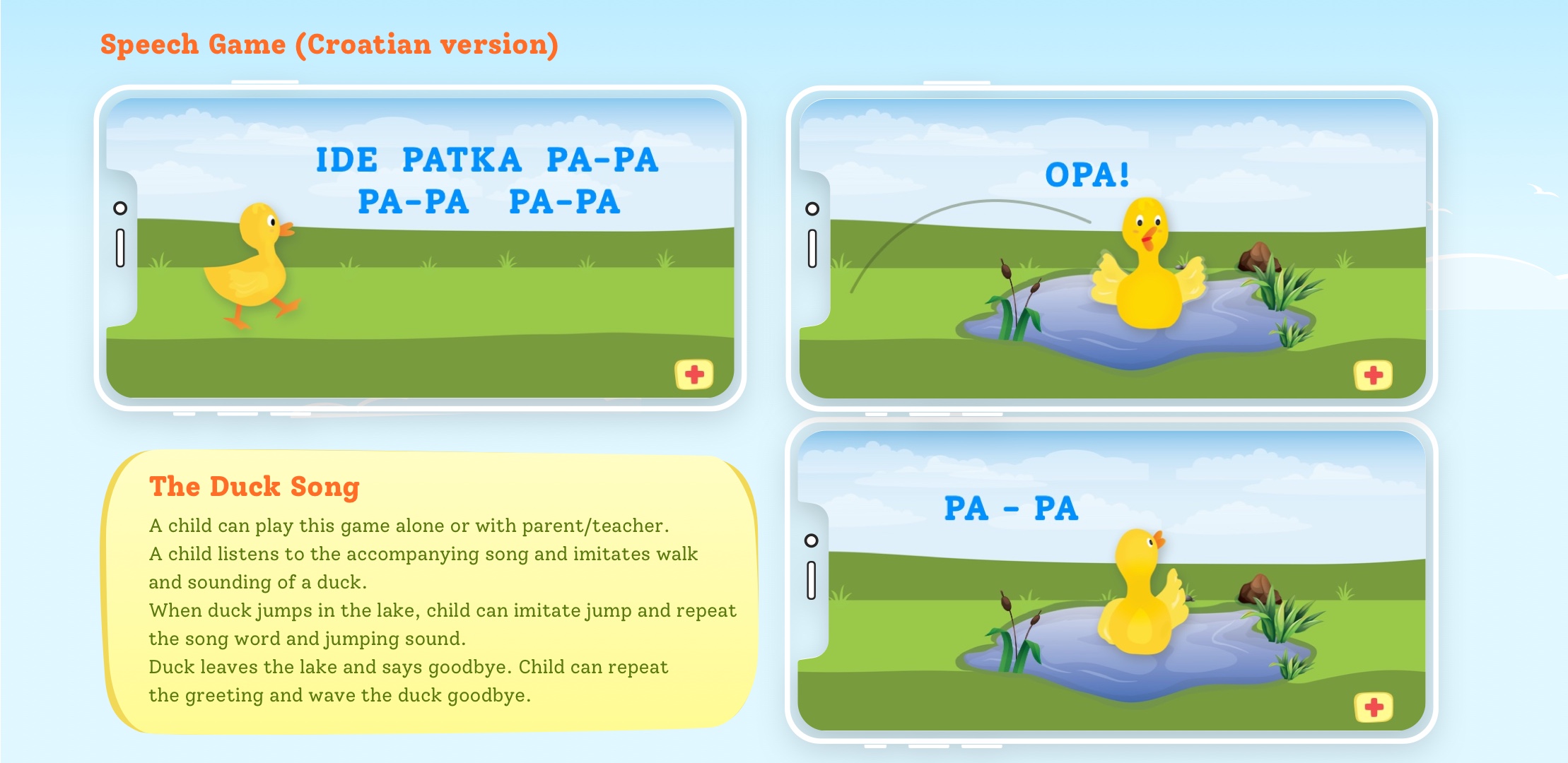
The first group consists of the sounds p, b, m, which are always associated with vowels, so the child first learns the words “mama”, “pa-pa” (goodbye in Croatian), “papa” (to eat in Croatian).
Another possibility is when child starts adopting articulation within group of sounds t, d, n, so the first words appear consistently, such as “tata” (dad in Croatian), “deda” (grandfather in Croatian), “nana” (to sleep in Croatian).
Further development includes the adoption of the group k, g, h; followed by v, j, so that by the middle of the 3rd year the child articulates all the sounds except s, z, c, š, ž, č, l, r. All the nursery rhymes for children of this age group are based on these sounds that a child can pronounce.
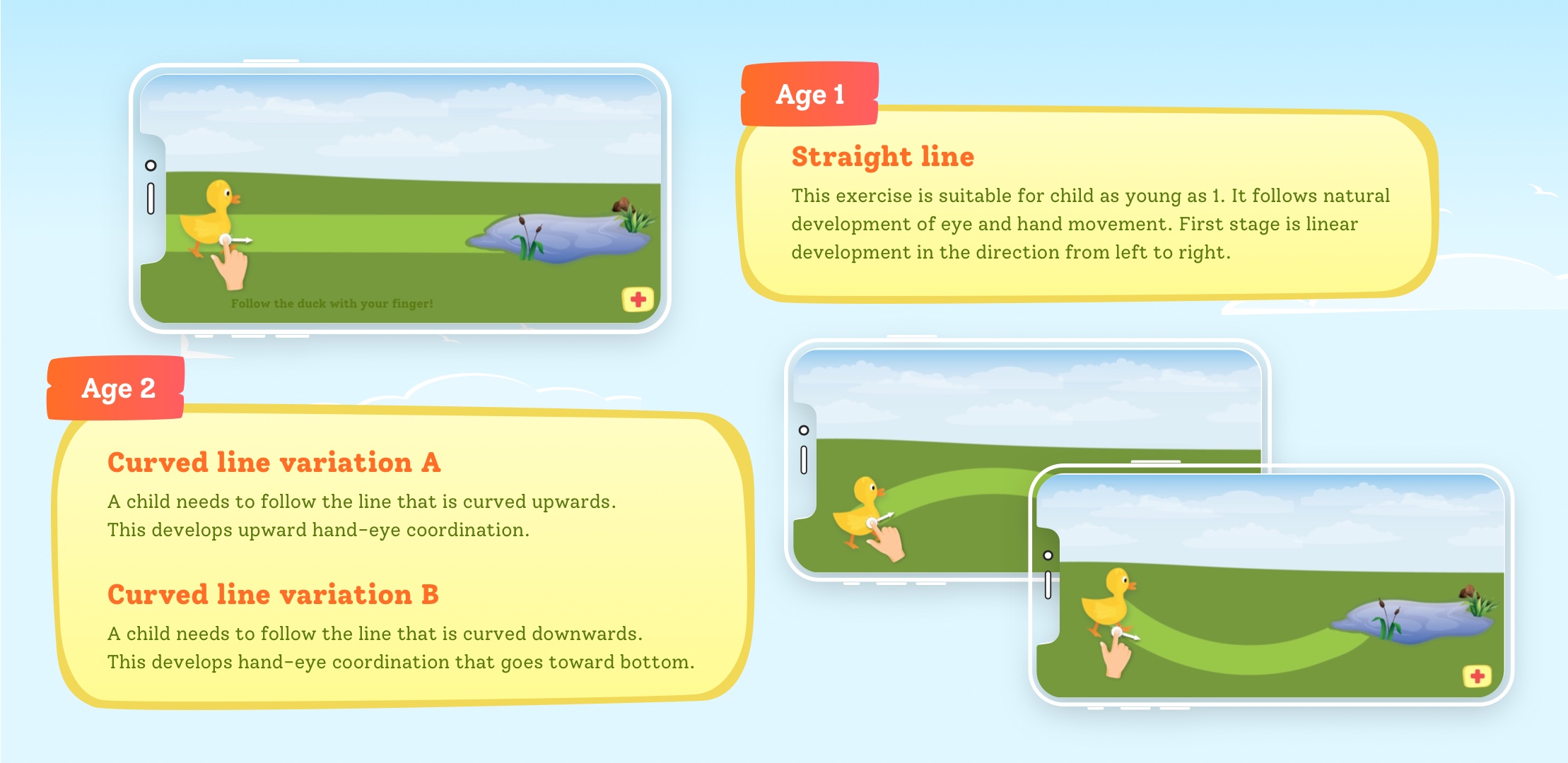
The program in the proposal contains an example of work on the development of the first voices and words for the purpose of communication. The child’s interest is aroused by play, counting, simple language forms and a simple pictures in vivid colors.